




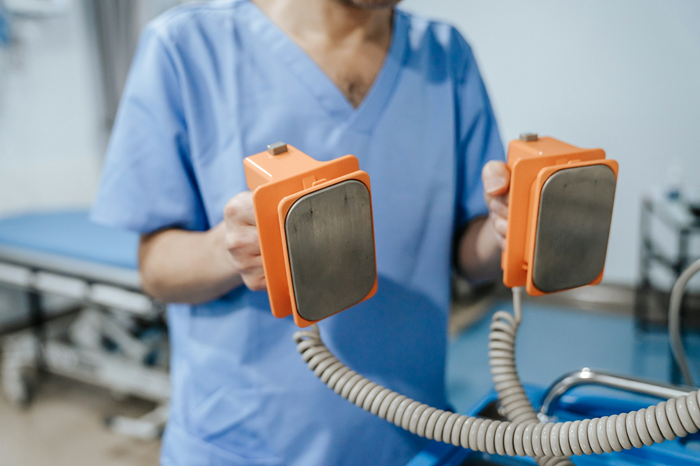
A defibrillator is a medical device designed to restore normal heart rhythm after sudden cardiac arrest. It is an automatic or semi-automatic device that analyzes the heart’s electrical activity and, if necessary, delivers an electrical impulse to restore the heart rhythm.
An important feature is the device’s ability to be used in outpatient or emergency situations, making it an indispensable lifesaving tool.
To safely and effectively use the Nihon Koden TEC-5531 defibrillator manual on this manualmachine.com, it is important to understand its operating principles and proper use. This article examines in detail the purpose of this device, its technical characteristics, and the main stages of its use, helping to understand how a defibrillator affects the heart and what precautions should be taken during use.
Analysis of the Operating Principles of an Automated External Defibrillator (AED)
An automated external defibrillator (AED) is a complex electrophysiological device designed to quickly and safely provide assistance during cardiac arrest caused by fibrillation or tachycardia. Its main components—sensors, a signal processing unit, and an electrical shock delivery device—work closely together to automatically diagnose and treat rhythm disturbances.
The operating principles of an AED are based on modern technologies for electrocardiographic signal analysis and automated decision making. This ensures rapid response in emergency situations and makes the device easy to use even for non-specialists.
Basic principles of AED operation
- ECG reading and analysis: The AED uses sensors to automatically collect the electrocardiogram signal, which is analyzed using built-in algorithms.
- Heart rhythm diagnostics: Based on the data received, the device determines whether defibrillation is necessary and eliminates unnecessary shocks, reducing the risk of patient injury.
- Automatic shock delivery: If fibrillation or severe tachycardia is detected, the AED administers the shock through the electrode pads or mats, delivering the necessary level of electrical energy to restore a normal rhythm.
- Safety and timely response: Built-in systems prevent accidental shock delivery and ensure a rapid response to changes in heart condition The patient.
Thus, the automated external defibrillator implements modern principles of electrocardiogram analysis and automatic shock delivery, making it indispensable in emergency situations. Its ability to independently diagnose and treat cardiac arrhythmia increases the chances of survival and simplifies first aid even for non-specialists.